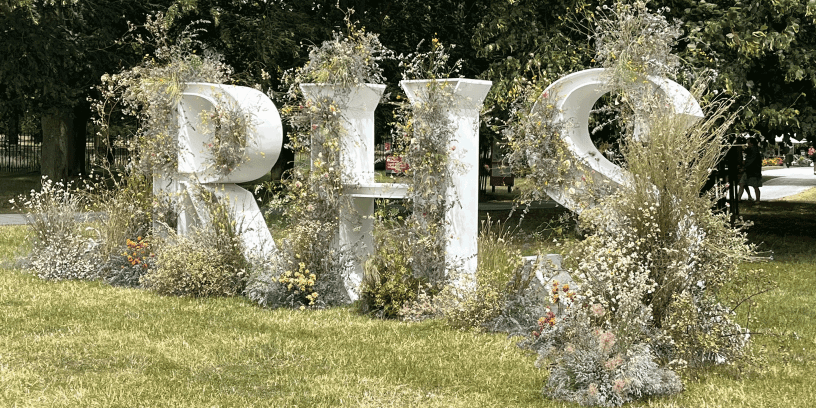
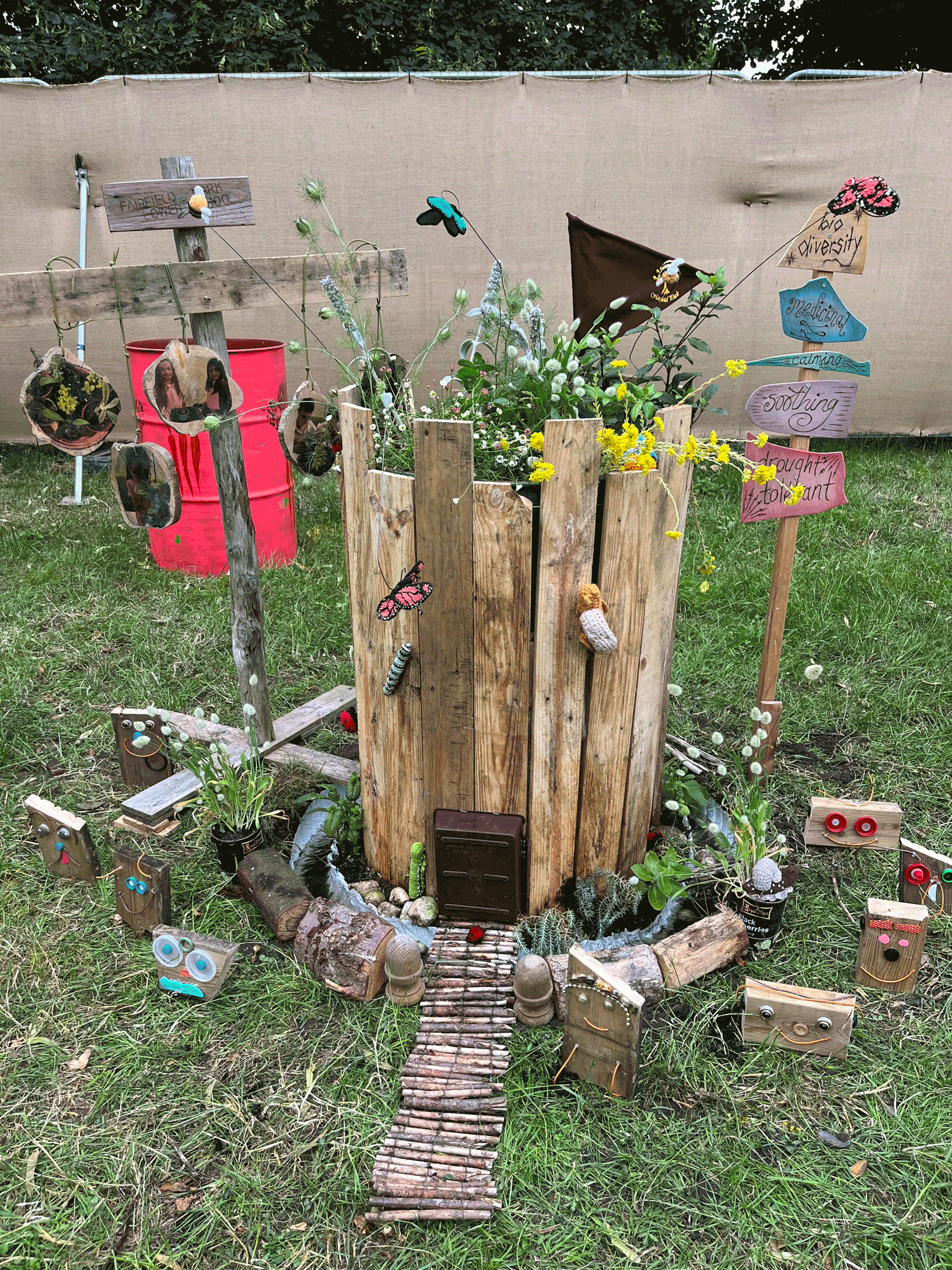
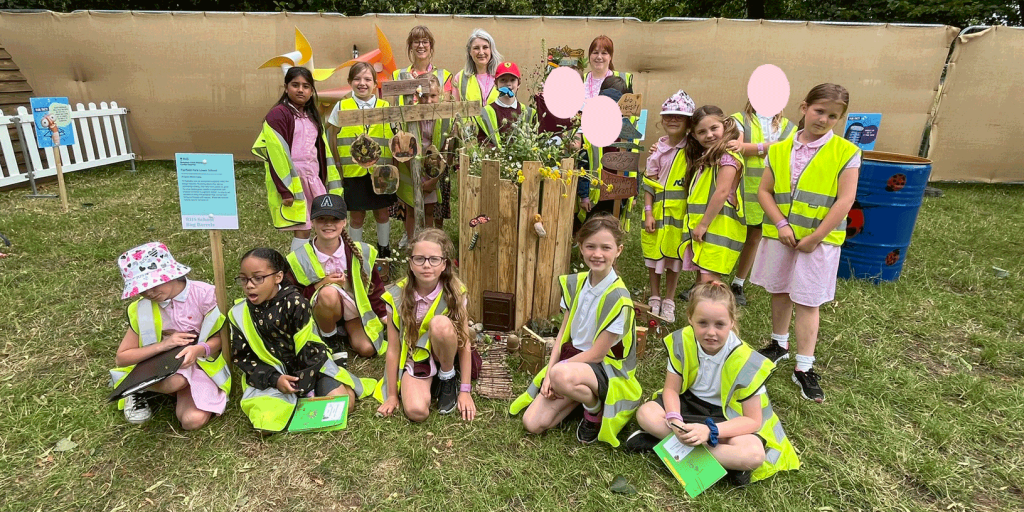
Fairfield Park Lower School is one of 15 schools that have been chosen to exhibit at the RHS Hampton Court Garden Festival this week with a bug barrel they have named A Castle That Cares. FM’s Deborah Kane caught up with the teacher in charge of the school’s gardening committee, Shelley Fox, to find out more.
DK: Your finished display looks amazing! How did you get involved in this event?
SF: Fairfield Park Lower School has a gardening committee on each site, and we’re part of the RHS Schools Campaign – we’ve achieved Level 2 on the School Gardening Awards scheme, and we’re trying to aim for Level 3, but we got sidetracked by this exhibition! So that’s how we knew about it. We were at the Hampton Court festival last year, too, with a bug hotel, but this year was more challenging because it was a bug barrel, so it all had to be built on site. There was an oil drum there for us to use, and they gave us the dimensions of it, but that was all we had. And then when we got there the dimensions were slightly different to what they’d said – just to add to the challenge!
DK: Was there a selection process?
SF: Yes – we had to send in a design, and a long application form explaining what it was and why we’d made the choices we’d made, and we also had to send a collage of photos of other projects we’d done, to show that we were really keen – which was actually nice because we got to look back and remember all those other projects we’d done. We’ve had potato fest, which is where every class competes to grow potatoes and then we find out who grew the most and the biggest and the best shape… and we’ve done Level 1 and 2 of the School Gardening Award scheme, seed swaps, seed sows, and we’ve got our own allotments… so there’s been quite a lot that we’ve put into gardening over the years.
DK: I didn’t know you had allotments here!
SF: Yeah, just round the side. I mean, it’s not straight lines and perfection, but it’s my happiest place – I love it. And all the children want to help. We’ve had peas from there, that the children have eaten; we’ve had rhubarb, which we actually sold out the front of the school, to help with funding – we made £7 from rhubarb – and we sold herbs, too, last year. Those did really well, so we need to do those again!
DK: So how did you go about designing your barrel?
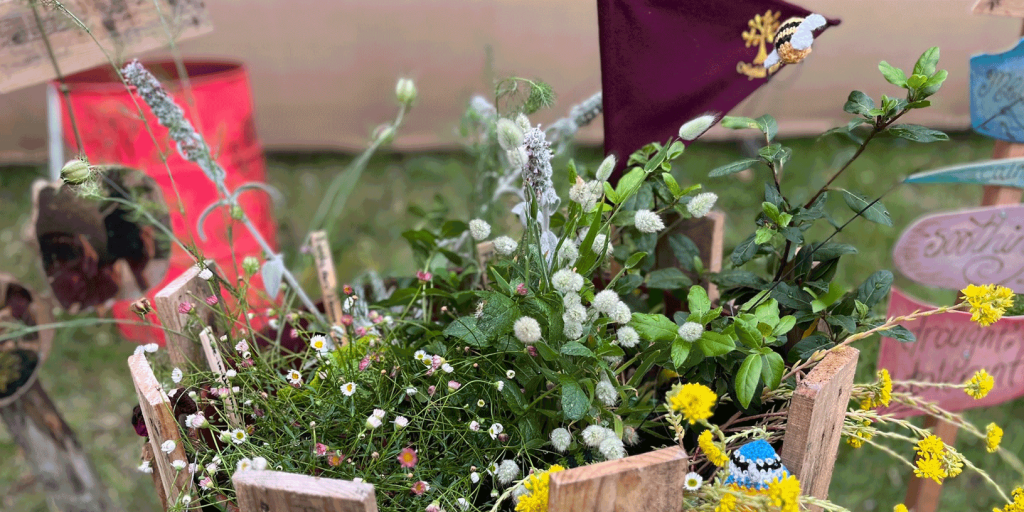
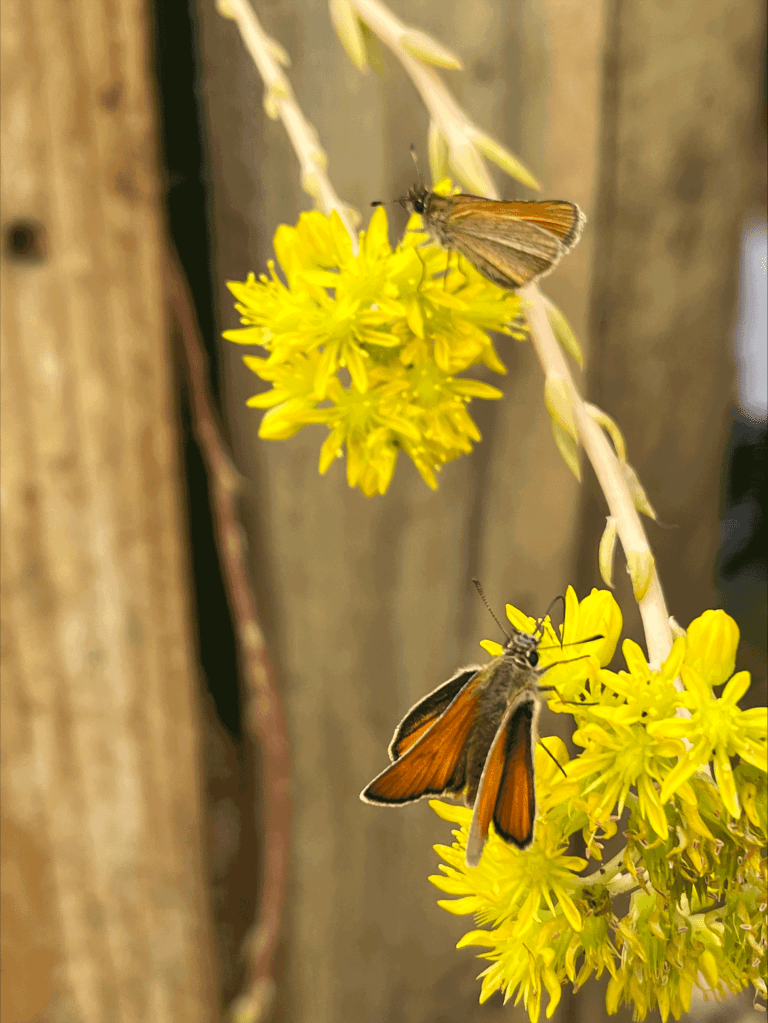
SF: Well, the project is all about pollinators and biodiversity, so the aim was to show that and teach other people about it. We came up with a design together as a group, and the whole theme is that it’s a castle. So we wrapped our barrel in wood to look like a castle, and we had a moat, and then up at the top there’s the pollinators and the plants. We chose plants that we can use for medicinal, healing purposes. So the plants look after us. But then in turn we need to look after the plants and the bees and the bugs – so it’s a really nice cycle.
DK: Were there any rules you had to follow?
SF: We had to grow 70 per cent of the plants ourselves, from seed or from cuttings. So we’ve learned so much from doing that. The gardening committees were learning how to take cuttings and look after them. We did rosemary – that didn’t go too well, but we tried. And we’ve done mint, we’ve got some lamb’s ears… And the children took the cuttings home to nurture. And they were so proud of them when they brought them back in to school. We’d talked about how you need to water them a little bit, and also, we said that if you talk to them and sing to them nicely they do tend to be happier plants. And then one little girl came back in with her cuttings and she told me, at night time I sing Twinkle Twinkle to this plant and I wrap it up for the night and then in the morning I sing cheerier songs to it. And she was so proud and so happy that she had nurtured this plant. I was super proud! I think King Charles would be proud, too. He sings to his plants, apparently!
DK: What else did you learn along the way?
SF: Loads of stuff! We learned about drought-tolerant plants, and climate change, and how things are going to have to be a bit more resilient in the future… Having said that it’s been raining lots this week, so our barrel has definitely got watered! And I also learned some new things – like I didn’t know you could eat lamb’s ears. You can use them in stew – one of the children saw it and said to me, oh yeah, my nan makes this!
DK: What about the other elements? There’s lots more than just plants in this project!
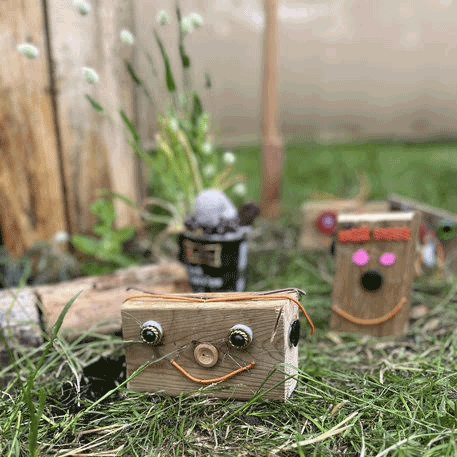
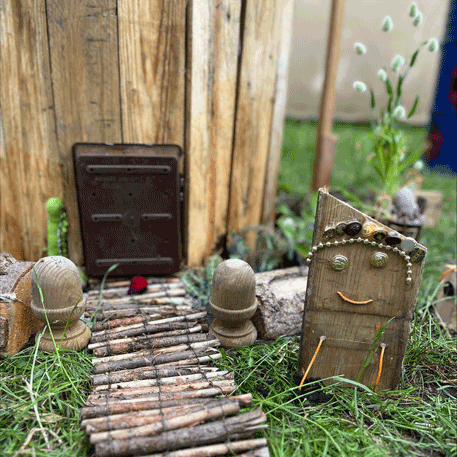
SF: The little wooden people were made by the Year 2s. And the children wrote labels for the flowers, saying what they were and what they were good for. And there are some slices of wood with photos transferred onto them, showing the children doing the work along the way… And then all of the little creatures that have been crocheted and knitted were done by the parents, grandparents, aunties… we’ve had lots of people contributing! And also we went over to Baycroft – took a little message over to them and said could you please help us, we’d really like your help. And they knitted and crocheted loads of little creatures for us – they were gorgeous!
DK: And then it was put together by the staff. Were the children pleased with how the bug barrel translated from their drawing into what you constructed?
SF: Yeah, I think so. The only thing is I think they would have liked to come and do it themselves, but there was so much going on that day that they were treating it like a building site, so they couldn’t be there.
DK: But the children have been to see it this week, haven’t they?
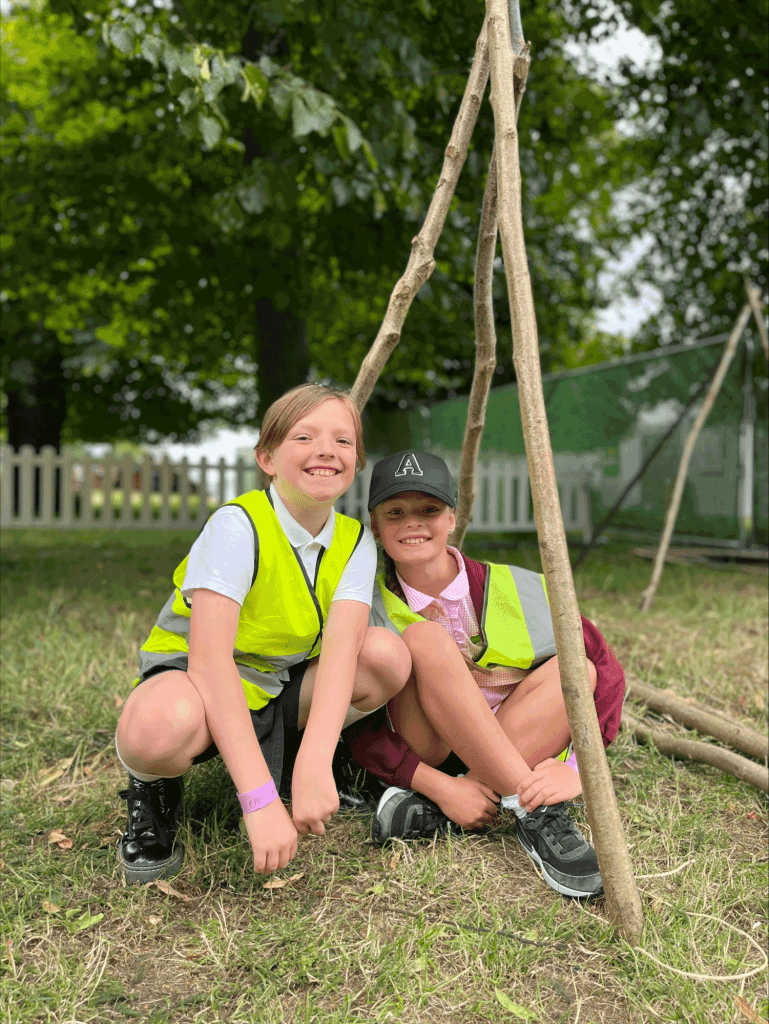
SF: We went on Monday, just with the Key Stage 2 children – so that’s Year 3 and Year 4. We took 18 children with us, out of about 30 children who were involved altogether. The trip was brilliant. We had coach karaoke on the way – I’ve learned a lot of new songs – and bus bingo, and when we got there we got to see Hampton Court Palace – we all went with our high vis on…
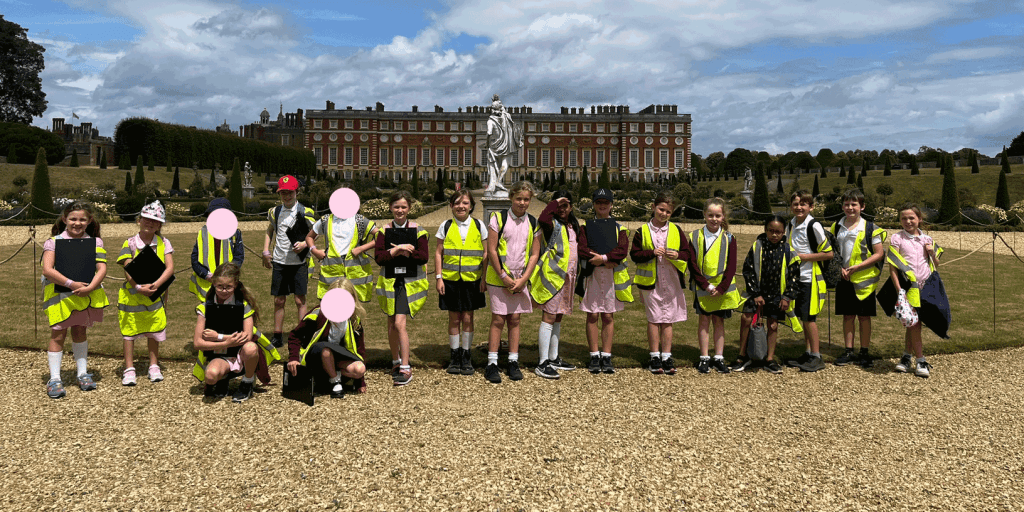
DK: You actually managed to visit the palace as well?
SF: Yeah! And it was press day so there were only a few other schools who were doing bug barrels, so we had it almost to ourselves – it was just us and the celebrities! So we glimpsed Mary Berry, we saw Carol Klein – she designed one of the gardens there – and Linford Christie…
DK: What else is at the festival besides bug barrels?
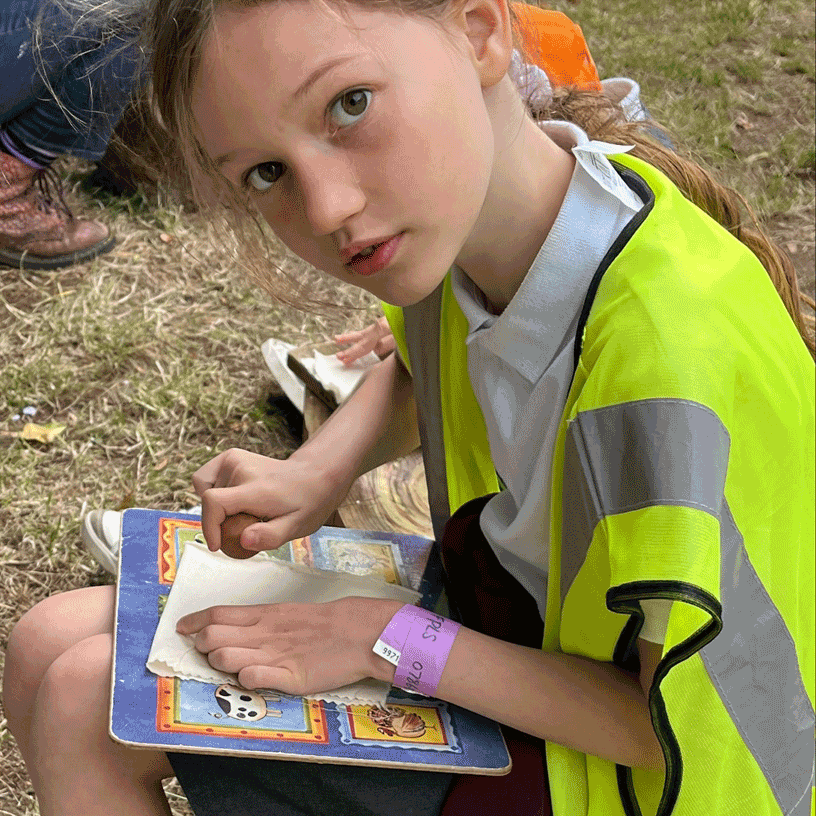
SF: We got to go to the forest school – we sat in a tipi and made dens and did some Hapa Zome, which is a kind of Japanese flower printing where you have to fold some flowers into a piece of fabric and then pound it with a wooden ball to transfer the dyes into the fabric. It was beautiful! So that’s something we might try doing at school. And then we got to look around the show gardens and the allotments. We got lots of inspiration from those. There was a pallet that had been planted up with a watering can at the top and a cycle of water going round, and the man there taught us about how you set it up, so the children are really keen to do that in our garden, and have a self-watering system.
DK: That sounds like quite a challenge…
SF: Well, I’m also DT leader, so… Maybe I can get the Year 4s to figure it out for me! It was great though because the children were all really inspired and they’ve come back with loads of ideas for things they want to do in our garden.
If you’re looking for some inspiration for your garden, or would like to visit the children’s bug barrel, the RHS Hampton Court Garden Festival is open until this Sunday, 9 July. For more information or to book tickets, visit https://www.rhs.org.uk/shows-events/rhs-hampton-court-palace-garden-festival.
 Fairfield Matters